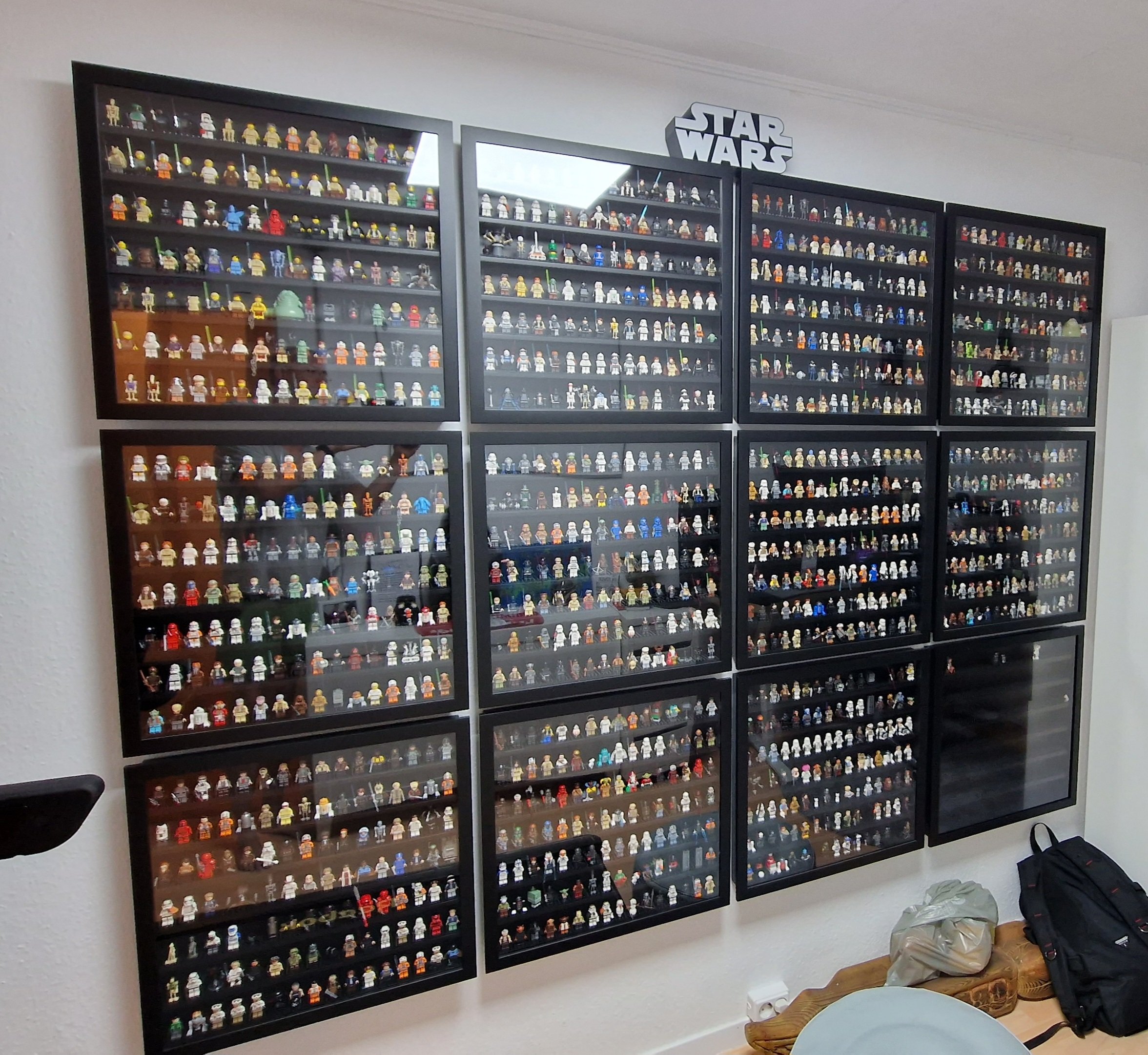
If you’re wondering how to display LEGO minifigures, start with three things: give them a stable place to stand, protect them from dust where practical, and keep them out of direct sunlight. A Digs for Figs frame holds 112 figures in a single row across seven shelves, 217 in two rows, or up to 315 at maximum capacity.
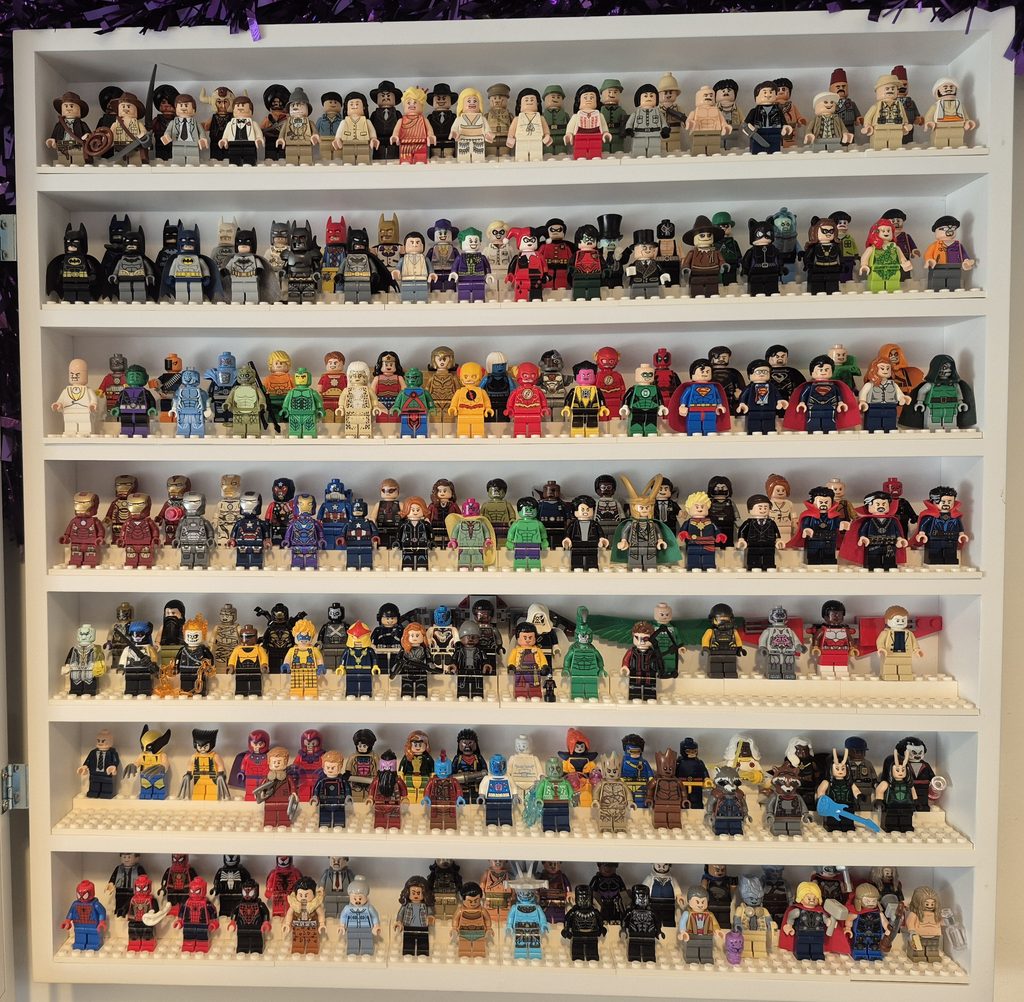
A minifigure collection can be as individual as the person who collects it. The trick is finding a way to display it that works for you.
Finding the Best Way to Display Your LEGO Minifigures
Let’s be honest: building LEGO is half the fun. Whether it’s a brand-new set, your own MOC (My Own Creation) or something resurrected from a box of mixed pieces, there’s real satisfaction in the finished result. And once it’s built, you want to look at it, not pack it away.
The same goes for minifigures. They’re tiny, but there’s an astonishing amount of character in them: the printing, the accessories, the expressions, the little details that make one version of a familiar character different from another. If you’ve spent time collecting them, it seems a shame to leave them in a drawer.
My own collection started with a few figures on a desk. Then they moved onto a baseplate on a shelf. Eventually, I needed somewhere more suitable to display them, which is what led Sonia and me to create Digs for Figs and our front-opening display frames.
But I don’t believe our way is the only way. A dozen favourite figures on a desk need something different from a collection of several hundred. Some collectors want every figure on show; others prefer a carefully chosen selection. The trick is finding a display that suits your collection, your space and the way you enjoy collecting.
1. Choose a LEGO Minifigure Display Method That Suits Your Collection
Before you start shopping for shelves, cases or stands, look at the figures you actually want to display.
How many are there? Are they mostly standard minifigures, or do you have capes, wings, large helmets and awkward accessories? Do you regularly add new figures? And do you enjoy rearranging your collection, or would you rather get everything in place and leave it alone?
Those answers matter more than finding the fanciest display on the market.
Open Shelves
A straightforward shelf is often the easiest place to start. It’s simple to arrange, easy to expand and lets you display minifigures alongside LEGO sets, vehicles or MOCs. A baseplate or LEGO plate keeps figures standing securely and makes rearranging a group easier.
The trade-off is dust. Open shelves leave your figures exposed, and small details around hairpieces, helmets and accessories can be fiddly to clean. Shelf depth matters too, particularly for figures with large accessories.
Best for: smaller collections, figures displayed alongside sets, and collectors who like to rearrange things regularly.
Individual Minifigure Stands and Display Bases
If you’ve got a handful of favourites, individual stands can be ideal on a desk, bookcase or alongside a larger build. They’re particularly useful when you want to give one figure a little space of its own.
The downside becomes obvious as your collection grows. A dozen stands can look great; a hundred take up a surprising amount of room and are hard to keep looking organised.
Best for: favourite figures, special releases and small collections.
Wall-Mounted Baseplates
Mounting baseplates on a wall makes use of space that might otherwise go unused, and can look striking when figures are arranged by colour, character or theme.
However, the figures remain exposed to dust and light, and you’ll want to make sure the mounting is secure.
Best for: collectors who want a relatively simple, expandable display and don’t mind regular cleaning.
Compartment Display Cases
Compartment cases give each figure a defined space. The result can be neat and consistent, especially for collections of similarly sized figures.
The limitation is the size of those compartments. A figure with a large hat, wings, a cape or a substantial accessory might not fit comfortably, even when an ordinary minifigure fits perfectly. Check the actual space in each compartment before committing.
Best for: uniform collections where a tidy, grid-like arrangement is the priority.
Front-Opening Minifigure Display Frames
A front-opening frame is worth considering when your collection has grown beyond a shelf or two, particularly if you want a wall-mounted display you can still access without taking the whole thing apart.
The front door makes it practical to rearrange figures or add new acquisitions while leaving the rest of the display in place. A glass front also helps keep dust off the figures between cleanings.
For figures with bulky accessories, shelf depth is important. A figure that can’t face forward properly, or whose accessories interfere with its neighbours, won’t be shown at its best. That’s why we designed Digs for Figs frames with extra-deep shelves. Not everyone needs that, but it matters if your collection includes some of the less conventional shapes.
Best for: larger collections, collectors who rotate figures, and displays where dust protection and easy access are both priorities.
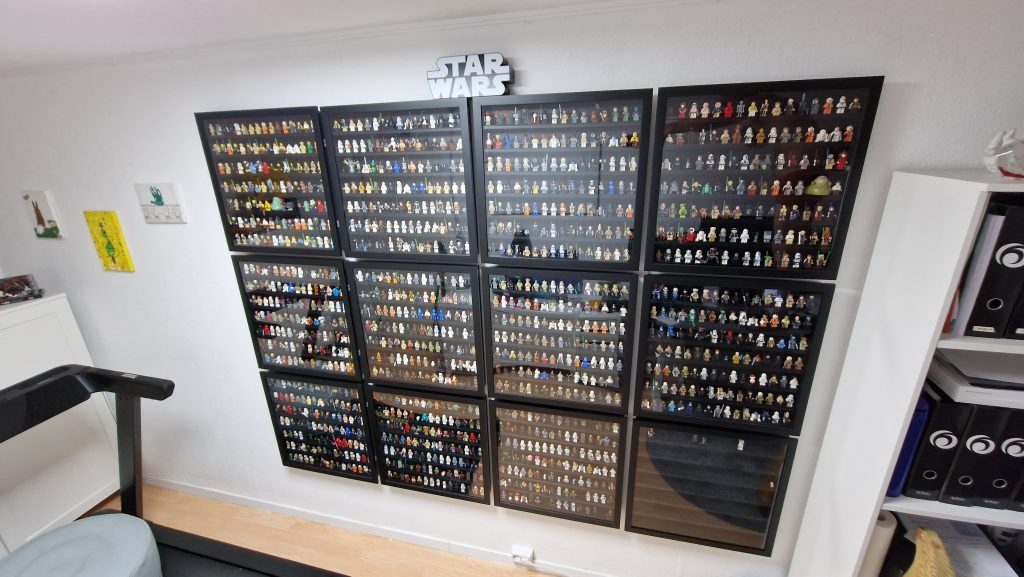
A dedicated display can turn a growing collection into part of the room, while keeping the figures organised and easy to enjoy.
2. How Many LEGO Minifigures Should You Display?
Count your collection before choosing a display. It’s tempting to buy something that looks good and work out the arrangement afterwards, but knowing whether you’re displaying 30 figures or 250 makes a big difference to how much space you’ll need.
For reference, a Digs for Figs frame has seven shelves and three useful capacity figures:
- 112 minifigures: a single row, for a relatively simple, gallery-style display.
- 217 minifigures: two rows, the sweet spot where most collectors land.
- 315 minifigures: maximum capacity, for collectors who want to fit in as many figures as possible.
Maximum capacity isn’t automatically the best-looking arrangement. A packed display fits a lot of figures; a less crowded one gives individual characters more breathing room. Neither is inherently better; it depends on whether your priority is completeness, presentation or a balance of the two.
Count the figures you want to display now, then allow for the ones you’re likely to add. And remember that numbers aren’t the whole story: a collection full of large accessories and unusual headpieces needs more space than the same number of standard figures.
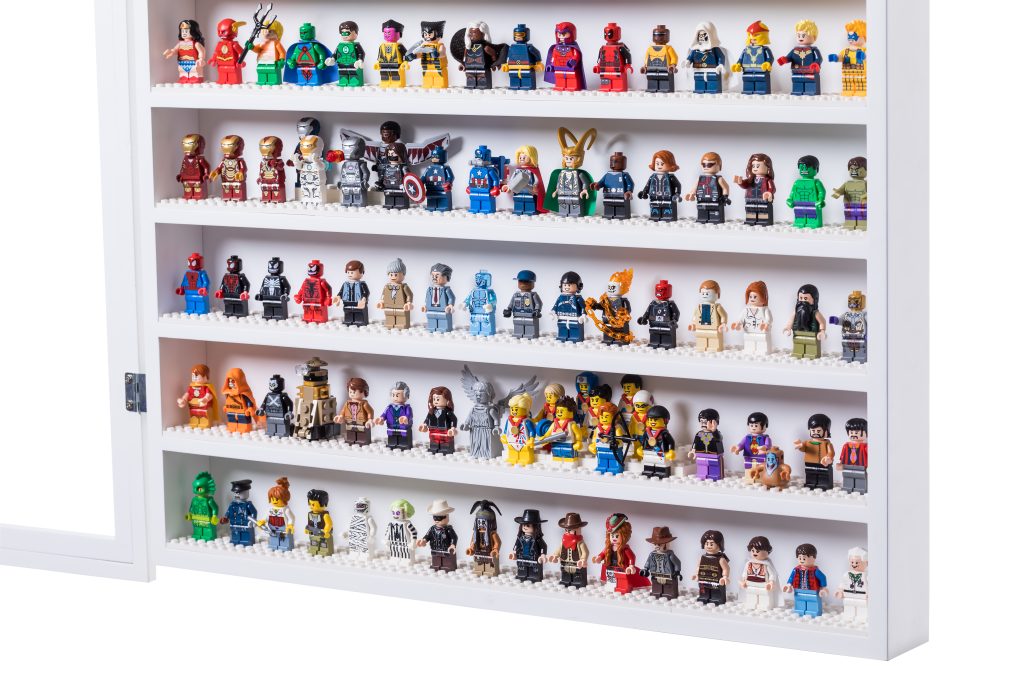
A single row gives figures more room to stand out, while a two-row arrangement balances visibility with collection size.
3. How to Choose Which LEGO Minifigures Deserve Display Space
This is a slightly contentious subject among collectors, because we all collect differently. Some people want every figure they’ve ever acquired on show. Others display only their favourites, collect complete themes, or pick up individual figures because they like the design.
There’s no wrong answer. But if space is limited, deciding what belongs in the display can be more useful than buying a bigger one.
On the Digs for Figs blog, we use a framework called Figdelity to think about which minifigures earn their place in a display-worthy collection. It scores figures out of 10 against five criteria.
Symmetry: Does the figure look balanced from the front? An accessory that pulls the silhouette to one side can change how it reads.
Simplicity: Is the design clean and recognisable, or is there so much going on that the main character gets lost?
Contrast: Does the figure stand out against its background and the figures around it? Similar colours can blend together, although sometimes that repetition is exactly what you want.
Averageness / Prototypicality: Is it a particularly good example of its type? Think of the knight that immediately looks like a knight, or the classic space figure that captures the visual identity of its theme.
Self-similarity: Does the figure fit the visual language of the theme or series it belongs to? A figure can feel especially satisfying as part of a recognisable group.
These aren’t rules for deciding which figures are valuable, rare or worth collecting. They’re simply a way of thinking about how a figure works visually. You don’t need to formally score every minifigure; the questions alone can help you decide what to display, what to keep in storage and what you might rotate in later.
Personally, I think the best displays tell you something about the collector. They aren’t necessarily the ones with the most figures. They’re the ones where you can see why those particular figures have been brought together.
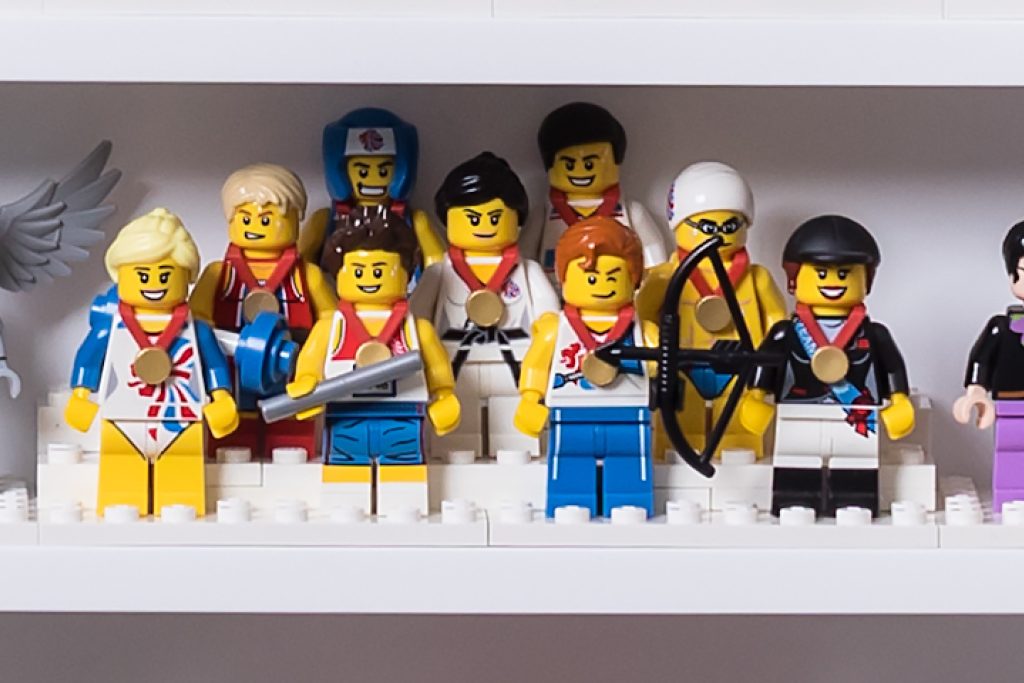
A display doesn’t have to contain every figure you own. Sometimes a carefully chosen group tells a better story.
4. How to Arrange LEGO Minifigures for a Better Display
Once you’ve chosen your figures and display method, the arrangement is where the fun really begins. The important thing is to give it some sort of logic, even if that logic is simply that you like the figures together.
Group Figures by Theme
This is probably the most natural starting point. Star Wars collectors might group Stormtroopers together, give Clone Troopers their own section, or arrange characters around a particular film or era. Others build displays around superheroes, Harry Potter, Indiana Jones or another favourite theme.
That’s how I’ve arranged much of my own collection. I have a row for Indiana Jones, sections for DC and Marvel, another for The Office, and separate areas for The Lord of the Rings and Pirates of the Caribbean. It’s easy to understand, easy to maintain and makes finding individual figures much simpler.
Arrange Figures by Character, Faction or Series
Sometimes a theme is too broad to make a satisfying display on its own. A Star Wars section, for example, can be broken down into factions, character groups or particular series. This gives each section a clearer identity and makes it easier to appreciate the similarities and differences between figures.
Use Colour to Your Advantage
Colour can make a display feel much more deliberate. You could group figures with similar colour schemes, create a gradual transition between colours, or alternate contrasting figures so each stands out.
Just remember that colour isn’t everything. Figures with completely different designs can still look cohesive if they share a theme or tell a story.
Keep Faces and Printing Visible
It’s easy to lose the details that made you want a figure in the first place. Face figures forward where possible, check that accessories don’t obscure torsos or faces, and make sure hats, helmets and hairpieces have enough room.
Look at the arrangement from your usual viewing position, too. A display that looks perfect up close may look quite different from across the room.
Leave Some Breathing Room
If figures overlap visually, or accessories hide the characters beside them, the display becomes difficult to read. A little separation helps individual designs stand out.
Of course, a tightly packed army of identical troopers can be effective in its own right. The question is whether the density is intentional or simply the result of running out of space.
And leave some room for future acquisitions if you can. Nothing is more frustrating than carefully arranging a collection, buying a few new figures and discovering the whole thing needs reorganising.
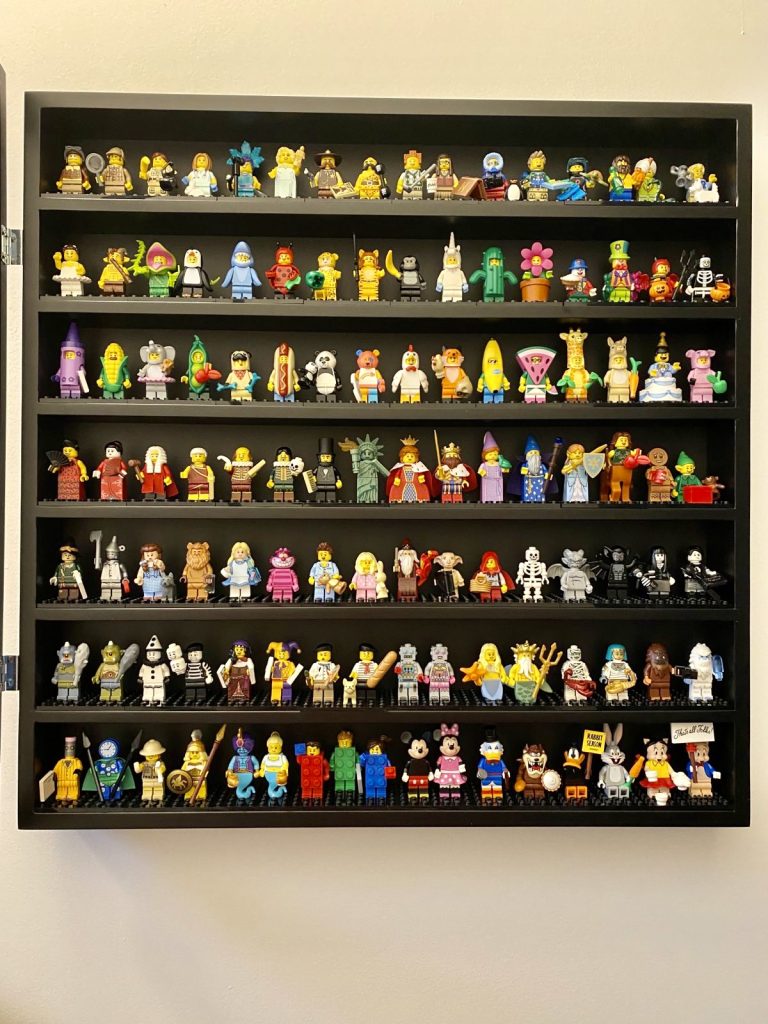
Grouping figures by theme or character makes a collection easier to browse and gives each section its own identity.
5. How to Display LEGO Collectible Minifigures (CMF) Series
If you collect LEGO Collectible Minifigures, there’s another way to approach your display: give each series its own row.
I’ve found this works particularly well because each series has its own identity. The figures were designed to sit alongside one another, and seeing them together makes it easier to appreciate the variety of characters, costumes and accessories.
The number of figures in a series has changed over the years. The original Collectible Minifigures series had 16 figures, the first Harry Potter CMF series had 22, and more recent standard series have typically contained 12. So a series-based display doesn’t need every row to hold the same number of figures, and it gives you a simple rule as your collection grows: one series, one row.
You can arrange the figures in numbered order, group similar characters together, or simply choose an order that looks good. Personally, I like being able to see a complete series at a glance, with each figure having its own place rather than disappearing into a much larger themed collection.
It also makes things easier to find. Instead of hunting for one figure among hundreds, you know roughly where to look, and when a new series arrives, you already know where it belongs.
Of course, not every collector wants to display complete series. You might prefer to pick out favourites or mix characters from different releases. But if completing series is part of the enjoyment, giving each one its own row is a satisfying way to show off the collection.
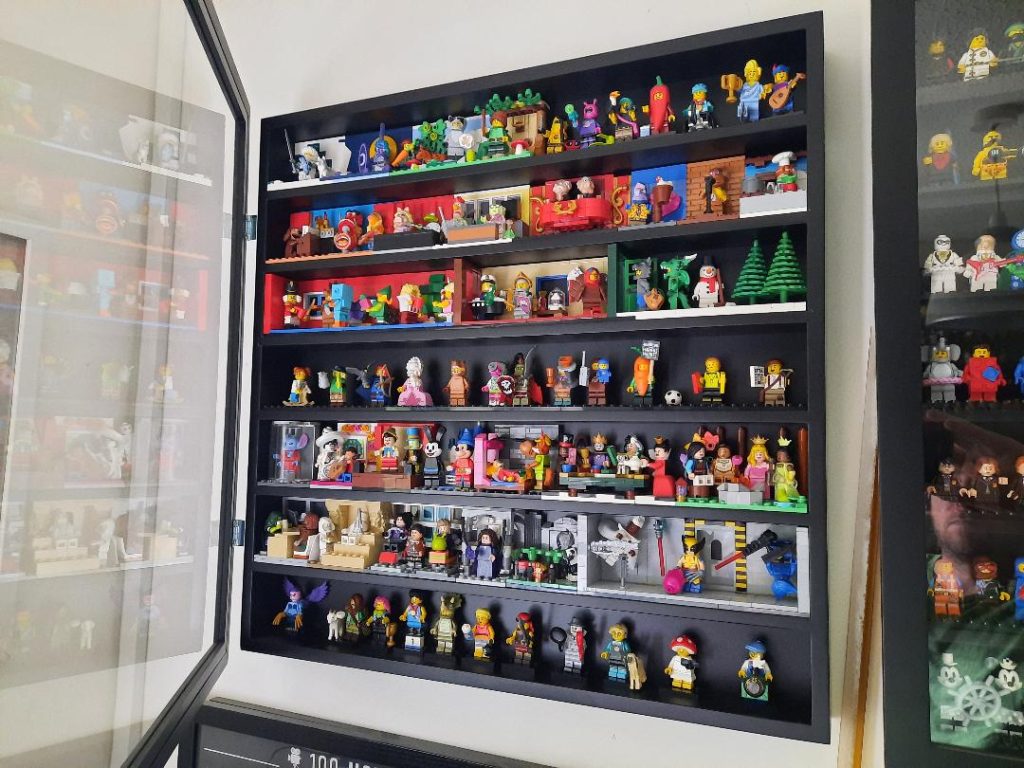
One CMF series per row makes it easy to see a complete series at a glance, from the original 16-figure series to later releases with different line-ups.
6. How to Protect LEGO Minifigures from Dust and Sunlight
A display should make your figures easier to enjoy, not harder to look after.
Keep Dust Under Control
Open shelves and uncovered baseplates collect dust, which settles around helmets, hairpieces and accessories. Glass or acrylic in front of the figures reduces how much reaches them, but no display should be assumed to be completely dustproof, so occasional cleaning is still worthwhile.
For exposed figures, a clean, soft brush can lift dust from awkward crevices. Work gently and take care around loose accessories and small parts.
Avoid Direct Sunlight
Prolonged direct sunlight can contribute to fading and discolouration, particularly in white and light-coloured plastic. Choose a position away from direct sun rather than relying on a glass front: ordinary display glass shouldn’t be treated as complete UV protection.
It’s also sensible to keep displays away from excessive heat, such as immediately beside a radiator or fireplace.
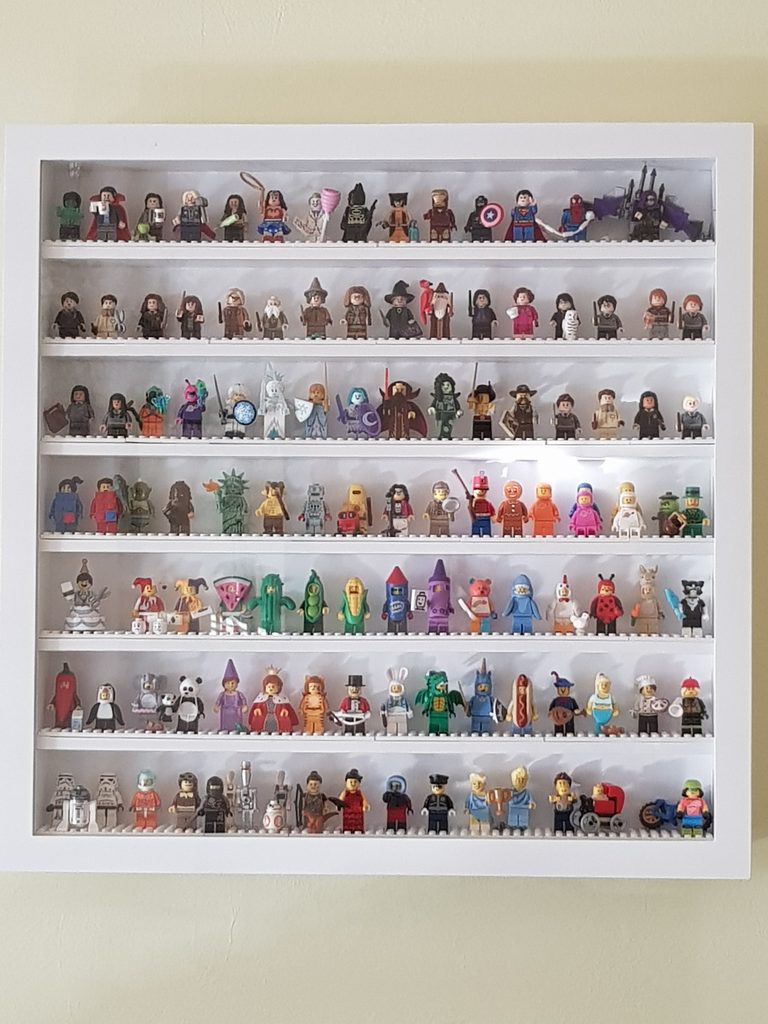
A glass front helps reduce dust build-up, although occasional cleaning is still part of looking after a collection.
7. Should You Display LEGO Minifigures with Their Accessories?
For some figures, the accessories are a big part of their identity. A weapon, shield, tool or distinctive headpiece might be essential to recognising the character. For others, a simpler presentation works better.
I’d generally display a figure with the accessories that make it recognisable, provided they fit comfortably and don’t obscure the figures around it. There’s little point in buying a particularly interesting minifigure only to hide the feature that makes it special.
Just remember that large wings, capes, weapons and headgear can make a figure much harder to accommodate than its basic body suggests. If those figures are a major part of your collection, choose your display around them rather than treating them as an afterthought.
8. When Is a Front-Opening LEGO Minifigure Display Frame Worth It?
A front-opening frame isn’t necessary for every collector.
If you’ve got ten favourite figures, a shelf or a few individual stands may be all you need. If you prefer to display figures alongside large LEGO builds, open shelving might make more sense. And if you rarely change your arrangement, a case you don’t need to open regularly may be perfectly suitable.
Where a front-opening frame starts to make sense is when the collection becomes large enough that rearranging it is a job in itself. Being able to open the front, change a few figures and close it again is useful when new releases arrive or you decide to reorganise a theme.
Our Digs for Figs frames are wall-mountable, with a glass front and extra-deep shelves. They’re available in black, white, blue and red, at £79.99 each on our website.
But the right question isn’t whether you need a frame. It’s whether the display you have now is doing the job you want it to do. If your figures are easy to see, easy enough to maintain and arranged in a way that makes you happy, you’ve got a good display. If you’re constantly dusting them, running out of room or taking everything apart just to add one new figure, it might be time to consider another approach.
Frequently Asked Questions About Displaying LEGO Minifigures
What is the best way to display LEGO minifigures?
There isn’t one best method for everyone. Shelves and baseplates suit smaller or frequently rearranged collections, stands suit a handful of favourites, and compartment cases or front-opening frames help organise larger displays. Weigh up capacity, dust protection, shelf depth and how often you change things.
How many LEGO minifigures fit in a Digs for Figs frame?
A Digs for Figs frame holds 112 minifigures in a single row, 217 in two rows (where most collectors settle) and up to 315 at maximum capacity.
How do I stop LEGO minifigures falling over?
Use a stable surface and, where appropriate, a LEGO plate or baseplate to secure the figures. Make sure accessories aren’t throwing off their balance, and keep figures out of places where they’re likely to be knocked.
How do I keep LEGO minifigures dust-free?
Glass or acrylic in front of the figures helps reduce dust build-up. Open displays need more frequent cleaning with a clean, soft brush.
Does sunlight damage LEGO minifigures?
Prolonged direct sunlight can contribute to fading and discolouration. Display figures away from direct sun, and don’t assume a glass front provides complete UV protection.
Should I display LEGO minifigures by theme or colour?
Both work. Grouping by theme, character, faction or series makes a collection easier to follow, while arranging by colour creates a striking visual effect. You can also combine the two, using colour within themed sections.
Is a front-opening display frame worth buying?
It can be a good option for larger collections, particularly if you want a wall-mounted display that’s easy to access and helps keep dust off. For a small collection, a shelf or individual stands may be simpler.
How should I display LEGO Collectible Minifigures series?
Give each series its own row, in release order or whatever arrangement looks best to you. The number of figures varies between series, so plan around the line-ups you own.
Over to You: How Do You Display Your LEGO Minifigures?
There’s no single correct way to display LEGO minifigures. Some collectors want every figure lined up in perfect order; others prefer a collection that grows organically around the characters and themes they love.
I’d be interested to know how you’ve approached yours. Do you group by theme, release, colour or something else entirely? Do you display everything you own, or only the figures that make the cut? And if you’ve found a clever way to display figures with awkward accessories, or a solution that works well in a small space, share it.
After all, the best display isn’t necessarily the biggest or the most expensive. It’s the one that makes you want to stop, look at your collection and enjoy it.